
Guide to Optimizing Your Career Page
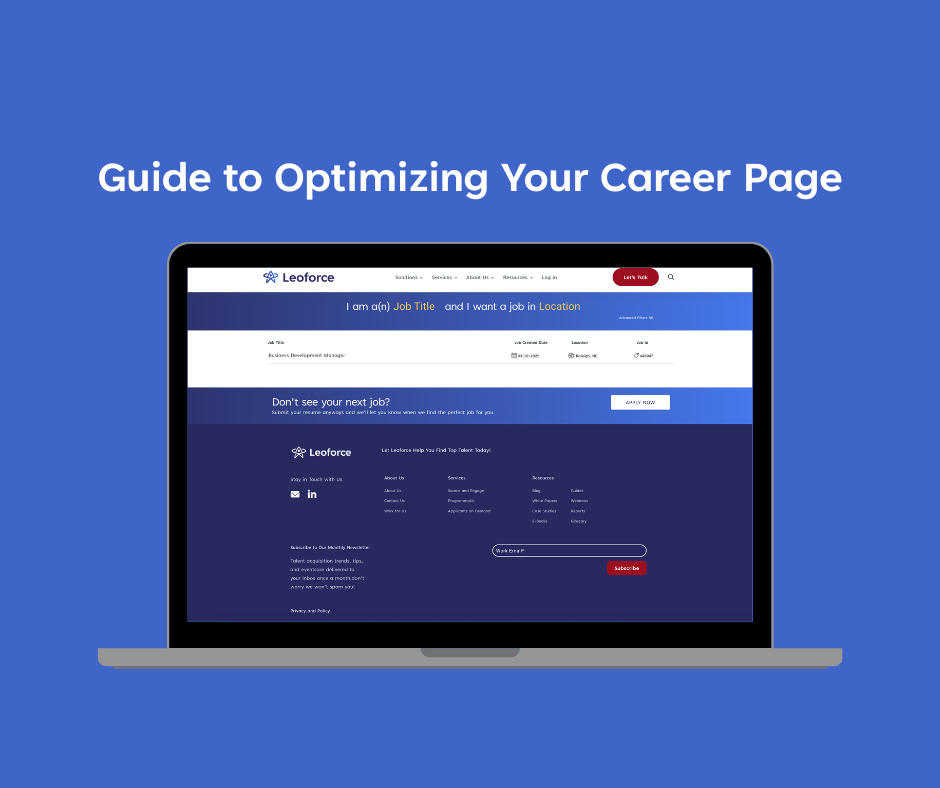
Guide to Optimizing Your Career Page
Your careers page is often the first impression job seekers, potential candidates, and potential applicants get of your organization. A well-optimized careers page and website serve as a valuable resource, providing essential information and building trust. Optimizing your careers site and website is a great starting point for attracting top talent, supporting your business goals, and driving business growth. Integrating recruitment marketing into your strategy, along with SEO best practices, enhances your ability to reach and engage potential applicants. Showcasing company culture on your careers page is a key benefit, helping to attract and engage potential candidates by giving them insight into your work environment.
1. Enhance Essential Information
Why It Matters:
Job seekers need transparency. Missing details like salary, benefits, or company mission can lead to drop-offs.
Best Practices:
-
Clearly display compensation ranges, benefits, perks, and advancement opportunities.
-
Showcase company values, mission, and vision front and center.
-
Include FAQs addressing common candidate questions.
2. Improve Navigation and Structure
Why It Matters:
A cluttered or confusing layout increases bounce rates.
Best Practices:
-
Use clear menus and section headers.
-
Add filterable job categories (e.g., location, department).
-
Offer quick links to top roles or urgent openings
3. Optimize for Mobile
Why It Matters:
Over 60% of job seekers use mobile devices. Poor mobile UX costs candidates.
Best Practices:
-
Use responsive design to adjust layout for all screen sizes.
-
Ensure fast load times on mobile.
-
Test the application process on mobile to avoid drop-off.
4. Strengthen Employer Branding
Why It Matters:
Candidates want to understand what it’s like to work at your company before applying.
Best Practices:
-
Include employee testimonials and “day in the life” videos.
-
Highlight diversity and inclusion initiatives.
-
Add photos of real employees and behind-the-scenes content.
5. Boost SEO
Why It Matters:
Even the best page is useless if candidates can’t find it.
Best Practices:
-
Use relevant keywords (e.g., “remote UX designer jobs in Chicago”).
-
Include meta titles and descriptions for each job post.
-
Use structured data (JobPosting schema) to improve job visibility on Google for Jobs.
6. Simplify the Application Process
Why It Matters:
Long, tedious application processes deter top talent.
Best Practices:
-
Use one-click apply options via LinkedIn or resumes.
-
Limit to essential fields only.
-
Allow users to save and return to incomplete applications.
7. Integrate Social Media
Why It Matters:
Candidates often research a company’s culture and activity through social media.
Best Practices:
-
Add live social feeds or social buttons.
-
Encourage social sharing of job listings.
-
Promote culture content (like office events) across platforms.
8. Update Content Regularly
Why It Matters:
Stale content suggests an inactive hiring process and hurts SEO.
Best Practices:
-
Remove or archive filled roles.
-
Regularly refresh job descriptions.
-
Keep content like videos and testimonials current
9. Ensure Accessibility
Why It Matters:
An inclusive site expands your candidate pool and ensures compliance.
Best Practices:
-
Follow WCAG 2.1 guidelines.
-
Use alt text for images, contrast-friendly colors, and keyboard navigation.
-
Provide transcripts or captions for all media.
Accessibility is increasingly a requirement. A fully accessible career page is also rewarded by search engines and essential for DEI.
10. Implement Analytics and Performance Tracking
Why It Matters:
Without data, you can’t improve what you don’t measure.
Check out 5 of our favorite career pages.
Best Practices:
-
Track metrics like bounce rate, application conversion rate, and time on page.
-
Use tools like Google Analytics, Hotjar, or Tag Manager.
-
A/B test different content, layouts, and CTAs
-
If your career page traffic is 1,000+ monthly visitors, consider implementing a career site chatbot
Learn everything you need to know about Candidate Engagement Agents by clicking here.
Improve Your Career Page Performance
An optimized careers page acts as both a marketing asset and a recruitment engine. By implementing these best practices, you’ll create a seamless experience that attracts top-tier candidates, aligns with your employer brand, and ranks well in search results.
Discover the benefits of implementing a Candidate Engagement Agent on your career page.
Recent Posts

Is Your Next Great Hire Is Already in Your ATS?
By admin |

5 Things Government Hiring Managers Should Look for in a Recruiting Technology Partner
By admin |
